Rotten Siding Replacement Before Painting: A Charlotte Fall Guide
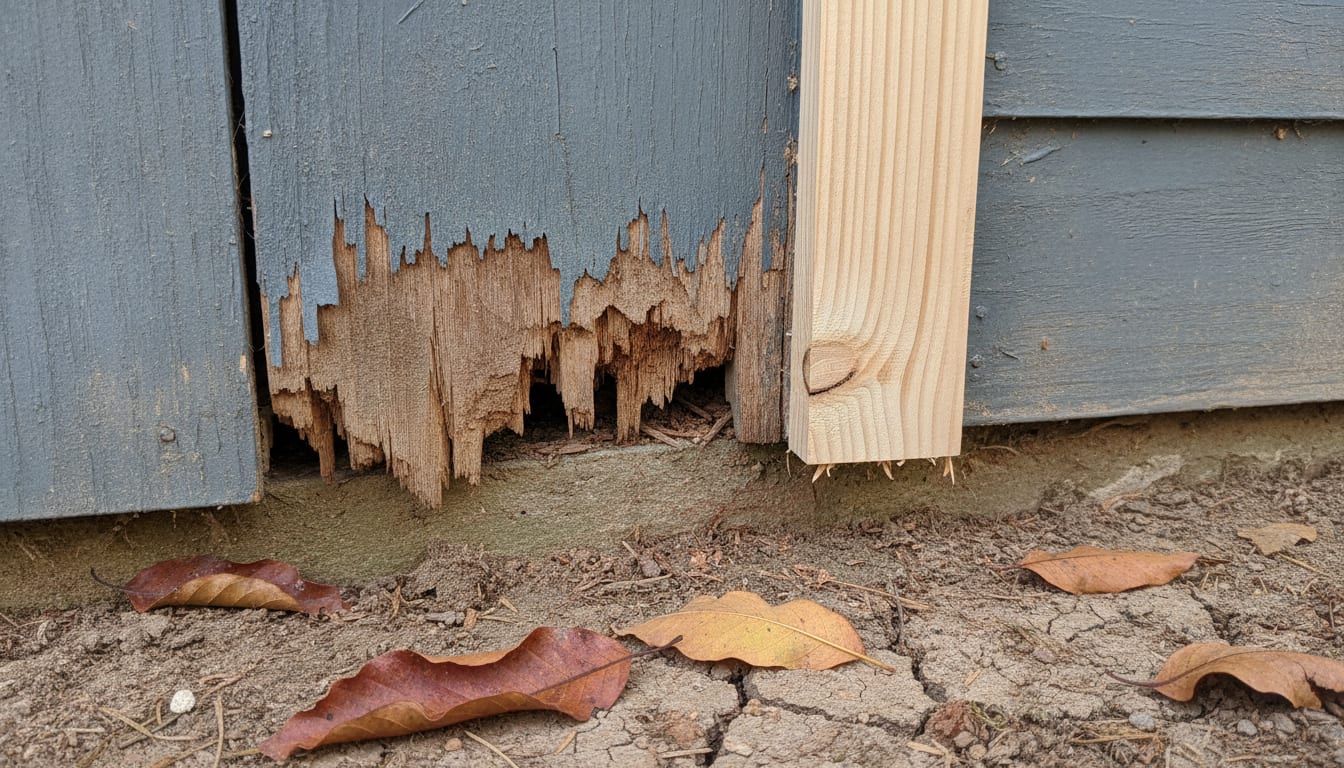
Why rotten siding has to be replaced before paint goes on. Albert Salazar explains the carpentry steps, before fall rain settles in Charlotte, NC.
Fall is a good time to look hard at your siding. The leaves are coming down, the humidity is easing up, and winter rain is still a few weeks off. It's also the season when homeowners around Charlotte and Mecklenburg County call us about soft spots they've been putting off - a soft patch near a window, a spongy board at the bottom of a wall, paint that's bubbling where it never used to. Before any of that gets a fresh coat of paint, it has to be dealt with. Here's why, and what that actually involves.
Why Paint Can't Fix Rotten Wood
Paint is a finish, not a repair. It seals and protects sound wood - it doesn't restore wood that's already soft, crumbling, or holding moisture. If you paint over rot, you're sealing moisture inside the board, and the wood keeps breaking down underneath the new paint. Within a season or two, the paint cracks, peels, or bubbles right back open, and the rot has usually spread further than where you started.
This is the part Albert Salazar checks closely at every estimate. He's been painting professionally since 1990, and he says the biggest difference between a paint job that lasts and one that doesn't usually comes down to what's happening underneath the surface - not the paint itself.
Where Rot Shows Up Most Often
Around Charlotte and Mecklenburg County, certain spots take the most water over the years: window sills and brick moulding, the bottom edges of siding boards near grade, fascia boards behind gutters that have overflowed, porch columns and railings, and soffit where attic moisture or a roof leak has been working quietly for a while. Older homes in places like Davidson, with their established tree cover and original wood trim, tend to show more of this than newer construction - but any house with wood siding or trim can develop it, especially after a wet summer.
The Carpentry Steps Before Paint Ever Goes On
When Albert finds rot during an estimate, it gets written into the price right then - no surprises once the crew shows up. Here's the order the work actually follows:
1. Pressure Washing First
The surface gets washed to remove dirt, mildew, and loose paint, which also makes it much easier to see exactly how far the damage goes.
2. Removing the Rotten Wood
Soft or damaged siding, trim, fascia, soffit, window frames, brick moulding, or porch columns get cut out or pulled off - only the damaged sections, not more than necessary.
3. Replacing with New Wood
Albert does this carpentry himself. New wood goes in to match the existing profile, so the repair blends into the wall instead of standing out as a patch.
4. Scraping, Sanding, and Caulking
Remaining edges get scraped and sanded smooth, gaps get caulked, and everything gets primed - including the new wood, which needs its own coat before paint ever touches it.
5. Paint, Then a Walk-Around
Once the prep is done and dry, the paint goes on. Albert walks the finished job with the homeowner before calling it done.
Why Fall Is the Right Time to Deal With It
Once winter rain sets in, any soft wood on your house keeps absorbing moisture, and a small repair now can turn into a bigger one by spring. Exterior painting runs for most of the year in Charlotte - the real limits are cold nights and rain - so fall estimates, while the weather's still cooperating, give you a better shot at getting the work done before the wettest months arrive.
What to Expect at the Estimate
Estimates are free, and Albert does every one himself. He'll walk the exterior, point out any rot or water damage he finds, explain the paint he'd use, and put the full price in writing before any work starts - repairs included, not added later. Customers mention that the price he writes down is the price they pay, and that the crew shows up on time and cleans up at the end of each day. It's part of why he says, simply, that it's quality over quantity - not how many homes get painted, but how each one turns out.
If you're seeing soft wood, peeling paint, or water staining anywhere on your siding or trim, don't wait for it to get worse over the winter. Call or text A Touch of a Brush at (980) 271-8603 for a free estimate - serving Charlotte and Mecklenburg County, including Huntersville, Cornelius, Davidson, Matthews, Mint Hill, and Pineville.
Frequently Asked Questions
How do I know if my siding is actually rotten versus just old paint?
Press on the wood gently - if it feels soft, spongy, or crumbles under light pressure, that's rot, not just worn paint. A screwdriver tip pushed gently into a suspicious spot will sink into rotten wood easily. If you're not sure, Albert can check it at your free estimate.
Will repairing rotten wood add a lot to my painting estimate?
It depends entirely on how much wood needs replacing, which is why there's no set figure to give. Albert looks at the damage in person, writes the repair into the estimate, and the price he puts in writing is the price you pay - no surprises once the crew starts.
Can rotten wood repair be done in the fall before winter rain?
Yes - exterior work runs for most of the year in Charlotte, limited mainly by cold nights and rain. Getting rot replaced and sealed in the fall, before the wettest months set in, helps keep the problem from spreading over winter.